


Used Sedan vs. SUV Fuel Efficiency Comparison Under $15k: Shop Affordable Denver Inventory
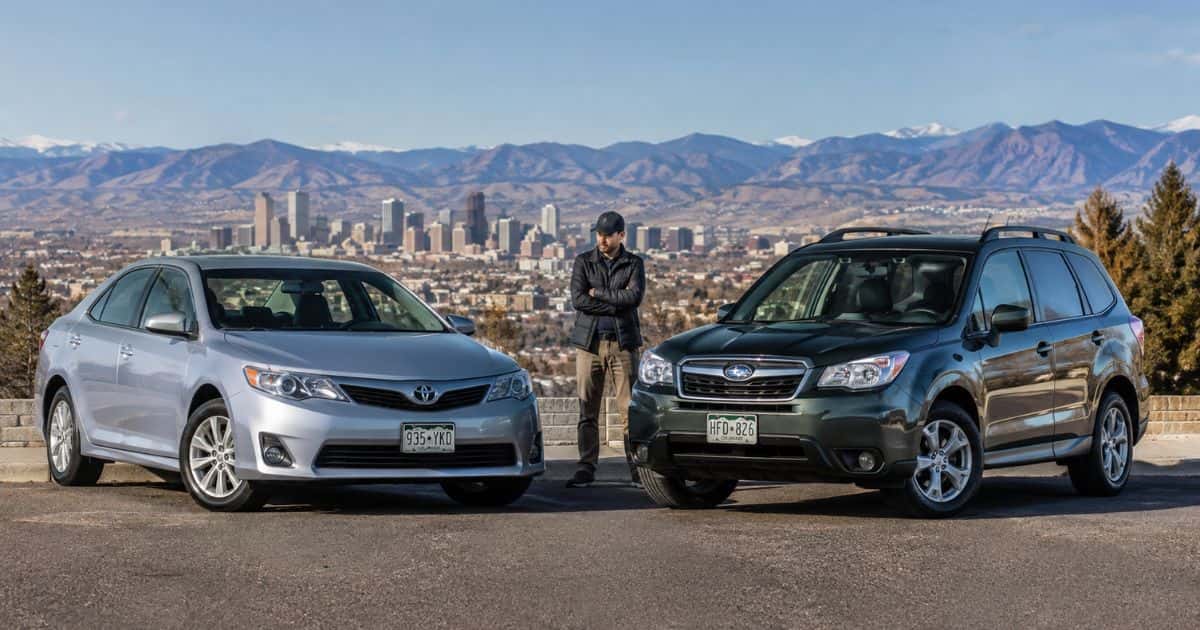
Fuel Efficiency Compared: Sedans vs. SUVs
Fuel economy is one of the clearest differences between these two body styles, and it’s worth understanding before you commit.
Typical MPG Ranges for Budget Sedans
Compact and midsize sedans average around 31 MPG, with efficient models like the Chevrolet Cruze, Hyundai Elantra, or Honda Civic landing in the low-to-mid 30s combined. That consistency is one reason sedans remain a smart pick for anyone logging steady highway or city miles.
Typical MPG Ranges for Budget SUVs
Compact SUVs average closer to 28 MPG, and anything below that is considered under segment average. AWD adds weight and drivetrain complexity, so a compact SUV rated up to 33 MPG combined in FWD often drops to around 31 MPG with AWD, and rugged AWD trims can dip to roughly 29 MPG. If you’re shopping AWD models under $15,000, like a Subaru Outback or Jeep Cherokee, expect a modest efficiency trade-off in exchange for better traction.
Denver Driving Factors That Impact Your Choice
Local conditions genuinely change which vehicle makes more sense, and Denver has a few quirks worth knowing.
Altitude, Weather, and Mountain Considerations
Denver’s mile-high elevation means engines make less power than they would at sea level, and that gap grows the higher you climb toward the foothills. It’s worth keeping in mind if you’re eyeing an older four-cylinder for regular mountain trips.
Colorado’s traction laws also come into play during winter. When they’re in effect, your vehicle needs adequate snow-rated tires or an approved traction device, and that applies whether you’re driving a sedan or an AWD SUV. Good tires matter more than the drivetrain alone.
City Commuting vs. Highway Driving
Denver commuters lose about 76 hours a year to traffic, wasting roughly 20 gallons of fuel annually, which adds up to an estimated $1,718 in lost productivity and fuel costs per commuter. If your routine is mostly stop-and-go city driving, a fuel-efficient sedan can help offset some of that daily drain.
Total Cost of Ownership: Fuel, Insurance, and Maintenance
Fuel is only part of the picture. According to AAA’s 2025 data, a small sedan costs around 56 cents per mile to own and operate, while a subcompact SUV runs about 66 cents and a medium SUV climbs to roughly 84 cents. Insurance follows a similar pattern, though older vehicles typically cost less to cover than newer ones.
To estimate your own numbers, multiply your typical weekly mileage by the cost-per-mile range for each body style, then multiply by 52 weeks. That gives you an annual comparison based on how you actually drive.
0 comment(s) so far on Used Sedan vs. SUV Fuel Efficiency Comparison Under $15k: Shop Affordable Denver Inventory